









Case report
Author
Rafael Enrique Galán Aranda, Estoneck Guevara Aguilar
DOI: https://doi.org/10.67442/gkj9nk09
Abstract
Surgical wound dehiscence is defined as a haemostatic breakdown between the tension of the abdominal wall over the strength of the abdominal tissues, the quality of these tissues, and the tensile strength of the suture used, the security of the knots, and the surgical technique employed. The factors that influence it are diverse, but by timing, it can be classified as early (3 – 21 days) or late (after 21 days). Depending on the complexity, it can be treated conservatively or, in some situations, may require intervention. The aim of this study was to evaluate the effectiveness of ozone as an adjuvant therapy on the healing rate of a dehiscent and infected surgical wound, using other current mechanisms such as VAC. A prospective analytical observational study was conducted to assess the use of ozone on the healing rate of infected dehiscent surgical wounds in a single case.
Surgical wound dehiscence is a hemostatic fracture between the tension of the abdominal wall on the strength of the abdominal tissues, the quality of the same and the tensile strength of the suture used, the safety of the knots and the surgical technique used, the influencing factors are diverse, but by temporality (3 – 21 days); late (after 21). Depending on the complexity, it may be treated conservatively or in some situations require intervention. The objective of this study was to evaluate the effectiveness of the use of ozone as an adjuvant therapy on the healing speed of a dehiscent and infected surgical wound, using other current mechanisms such as VAC (Negative pressure wound therapy (NPWT). A prospective observational analytical study was conducted to evaluate the use of ozone in the rate of healing of infected dehiscent surgical wounds of a case.
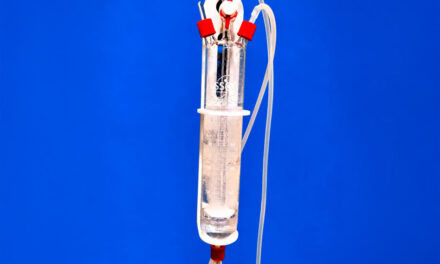
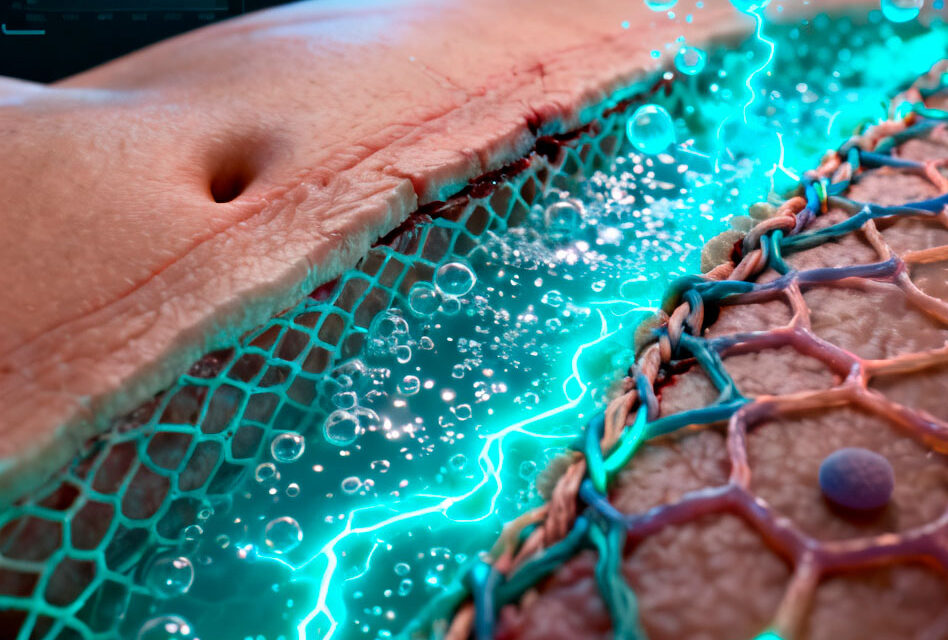
The surgical wound was treated with cleaning using microbubbled ozonated saline solution at a dose of 40 to 60 µg/NmL, debridement of the exposed and infected area, and application of a VAC (Vacuum-Assisted Closure) device for 11 days. The VAC was then removed, followed by another surgical cleaning with micro-bubbled saline solution at 40 µg/NmL, and the wound edges were approximated, resulting in complete resolution within 2 weeks. The therapy was accompanied by systemic administration of ozone via microbubbled ozonated saline solution, calculated per kilogram of body weight.
The bactericidal power of ozone against multi-resistant microorganisms is evident, and this case was no exception.
This post is also available in:  Español (Spanish)